

When parents in our community think about brain devices to treat their children’s seizures, they often hear only about the potential for seizure reduction. But will thinking, learning, school, and daily life get better for many of these kids and young adults?
The Bottom Line: A new study shows that the RNS device helps 8 out of 10 children have fewer seizures. It also helps them do better in school and feel happier. You do not need to be seizure-free to see these improvements.
What did this study look at?
Doctors followed 32 children and young adults with medication-resistant epilepsy who received a responsive neurostimulation device (RNS) at one hospital that has a dedicated pediatric RNS program. Most were still kids or teens, many had seizures that started in early childhood and had already tried an average of nine seizure medications (plus diets and even other epilepsy surgeries).
How much did seizures go down?
The study showed that RNS works better the longer it is used.
When they look at the patients one year later, eight out of ten had their seizures cut at least in half. For the children alone, three out of four had at least a 50% drop in seizures. For those who were followed-up after two years, seizures fell by about 90% if they were in the middle of the group. Almost half of these children were “super responders,” meaning their seizures dropped by 90% or more.
| Time After RNS Implantation | How many saw a 50% drop? | How many saw a 90% drop? |
|---|---|---|
| 1 year | 80% of patients | 50% of patients |
| 2 years | Almost all patients | Most patients |
Will RNS help my child do better in school?
For most families, “thinking skills” are just as important as stopping seizures. In this study, parents and caregivers reported clear improvements in thinking and school‑related skills, including:
- Paying attention to teachers and schoolwork;
- Reading and understanding what they read;
- Remember things they learning a few days ago;
- Finding the right words when understanding.
About nine out of ten reported getting better on at least one “thinking/school” question. In kids under 18, 93% reported improvement in at least one thinking/school area.
On average, families felt their child’s thinking and school abilities improved, not just stayed the same.
How does RNS change daily life and mood?
For many of the children, the changes were not limited to school. Families noticed a big change in how their children felt and acted.
- Daily life: 2 out of 3 children were more independent;
- Mood: 80% of children were in a better mood;
- Emergency needs: Every single family in the study said their quality of life improved because they had fewer ER visits and needed less emergency medicine!
“Many of our patients reported that they and their children experienced improvements in their quality of life after RNS treatment. This sentiment was captured … quality-of-life survey completed by patients or their caregivers. These findings are consistent with prior reports in children … and highlight the need for further work to evaluate potential relationships among these improvements and decreases in long episodes recorded on the device, clinical seizures, stimulation locations, and/or improved seizure tracking.”
Do seizures have to stop completely for life to get better?
One of the most important findings in this research study is that seizures don’t have to vanish for a child to feel better. Even children who still had some seizures showed better focus and mood. This suggests benefits may come not only from fewer seizures, but possibly from shorter or less severe events, better sleep, fewer hospital days, or more control and predictability day‑to‑day.
For families, this matters: RNS doesn’t have to be a cure to make life better.
What this means if your child has drug-resistant seizures
This was a group of some of the “toughest” epilepsy cases – lots of anti-seizure medications tried, different causes of seizures, often developmental and epileptic encephalopathies. But yet, many children still experienced a big reduction in seizures and meaningful gains in thinking and daily life. Cognitive and school improvements were common, not rare. In fact, almost all surveyed children showed at least one area of better thinking or school function. Quality‑of‑life gains (less ER time, more independence, better mood, less fear) may matter just as much as the seizure numbers, and this study shows those gains in a measurable way.
Why isn’t the RNS device approved for use in children?
Right now in the United States, the RNS device is still not officially approved for children with epilepsy, even though it has been used in adults for years and there is strong evidence it helps kids, too. Many (but not all) epilepsy centers use the RNS device, and it can be a battle to get public or private insurance to pay for the device and surgery. And because it’s not approved for children, many pediatric hospitals don’t have access to the device yet.
In 2024, two medical societies (the Congress of Neurological Surgeons and the American Association of Neurological Surgeons) published a position statement about RNS and deep brain stimulation (DBS), another type of brain device. It explains that thousands of people with drug‑resistant epilepsy have already been treated safely with RNS and DBS, with big drops in seizures, better thinking and quality of life, and a lower risk of sudden death from epilepsy. It also points out that drug‑resistant epilepsy is much more harmful and expensive in the long run than surgery or neuromodulation. Two more medical societies signed onto the position statement as well.
For our kids, this gap is terribly unfair. We know that uncontrolled seizures can damage a child’s brain, seriously hurt learning, behavior, and long‑term brain function. We’ve seen firsthand how seizures can cause them to regress. When removing or disconnecting the seizing part of the brain is not possible, too risky, or tried but there wasn’t a big drop in seizures, these devices may be one of the only ways to get seizures under better control.
A child’s age should never block access to a device when a child’s medical team believes it can help. If science and real‑life experiences say these devices can help children, but FDA approval and insurance policies have not caught up, this leaves thousands of children to keep suffering even though we already have technology that can help.
It’s wrong.
Is RNS covered by insurance?
RNS is not automatically covered for children, because the device is only FDA‑approved for adults 18 and older, but it can be covered on a case‑by‑case basis. Many private and public plans insurance plans state that the RNS System is “broadly covered,” but they are talking about adults who meet the FDA indication. For pediatric patients, coverage is “off‑label”, which means insurers may deny the first request and require extra steps to show medical necessity.
In real life, some children do get RNS paid for by insurance after an appeal, especially when their epilepsy team provides strong documentation and supporting research. A published case report notes that the insurer initially could have denied coverage because the patient was under 18, but special approval was obtained in advance through a medical‑necessity appeal. Pediatric epilepsy centers that offer RNS often work closely with families on this process, but it’s important to prepare yourself for denials and appeals.
My friend Lisa Lightner, a well-known special education advocate, fought her insurance company for the RNS device for her child. She writes about the battle here: Insurance Appeals: How I forced AETNA to pay for my son’s brain surgery
What should I do next?
If your child has seizures that medicine cannot stop, you may want to look into RNS.
- Ask for a surgical evaluation: Get to an epilepsy center with a team with experience treating your child’s epilepsy type and that has access to the RNS device. Make sure the whole team is experienced and properly trained. The bigger the surgery, or the newer the technique, the more experience the team will need.
- Gather information: Remember – having a surgical evaluation doesn’t mean you have decided your child will have surgery. It means you want to understand all your options so that you can make an informed decision for your child.
- Talk to another parent: It helps to hear from someone who has been there.
Connect with an RNS parent
If you want to talk to another parent whose child has had an RNS device implanted, you can connect with one of our parent support navigators here.
Is there financial aid available to help me get to a hospital that has the RNS device?
Yes! Dreams for Danny, our surgical evaluation travel scholarship, will reimburse your cover travel costs like airfare, ground transportation, and even food at the hospital where your child gets evaluated to see if the RNS – or any other device or epilepsy surgery – can help.
Read the study
It’s important to remember that this study was small. We need more research to understand how neuromodulation devices improve the quality of life for the children in our community.
Geffrey AL, Kwon H, Shi W, et al. Seizure and quality-of-life outcomes following responsive neurostimulation treatment for drug-resistant epilepsy in children and young adults. J Neurosurg Pediatr. Published online January 30, 2026 [full study requires purchase]
Vagus Nerve Stimulation, Deep Brain Stimulation, Responsive Neurostimulation
This 50‑minute video is an excellent starting point for families learning about neurostimulation. Pediatric epilepsy surgeons Dr. Taylor Abel and Dr. George Ibrahim explain, in clear and practical language, how VNS, RNS, and DBS work, when to consider each device, how they can be combined with other surgeries, and what realistic goals look like for seizure reduction. It’s a deep, yet understandable overview to watch before you talk with your child’s epilepsy team about neuromodulation devices.
Dr. Taylor Abel, MD, FAANS, is the Director of the Pediatric Epilepsy Surgery Program at UPMC Children’s Hospital of Pittsburgh and Dr. George M. Ibrahim, MD, PhD, FRCSC, FAANS, is a pediatric neurosurgeon at The Hospital for Sick Children in Toronto, Canada, Assistant Professor at the Institute of Biomaterials and Biomedical Engineering, and Institute of Medical Science, Department of Surgery at the University of Toronto, and Associate Scientist Program in Neuroscience and Mental Health at SickKids Research Institute. Dr. Abel is a member of our board of directors, and Dr. Ibrahim is a member of our scientific advisory board.
What’s New In Vagus Nerve Stimulation, Deep Brain Stimulation, Responsive Neurostimulation
This presentation is a follow‑up to our original neurostimulation overview and focuses on what’s new in the research for VNS, RNS, and DBS in children with epilepsy. It updates families on the most recent pediatric data, including how well these devices are working in real‑world kids, what we’re learning about cognition and quality of life, and how newer approaches like thalamic targets and combined therapies are changing practice.
about the author
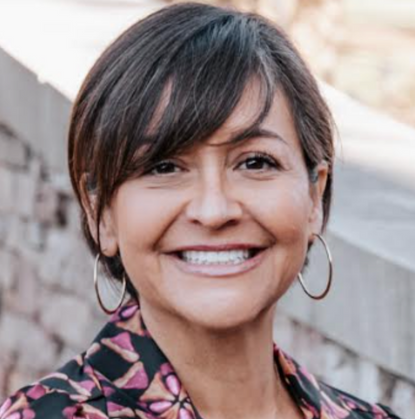
Monika Jones, an inactive lawyer, is our founder and executive director. Her first son, Henry, had a modified lateral hemispherotomy, revision surgery, then true anatomical hemispherectomy to stop seizures caused by total hemimegalencephaly. She is also the principal investigator of the Global Pediatric Epilepsy Surgery Registry, the only parent-reported data collection to understand the developmental trajectory after pediatric epilepsy surgery. A strong believer in collaboration, she serves on the Pediatric Epilepsy Research Consortium‘s Research committee, the ILAE Neurobiology Commission’s Research Advocacy Task Force, and is an active member of the Rare Epilepsy Network and the Infantile Spasms Action Network. You can review her publications as well as contributions to collaborative research and advocacy projects at orcid.org/0000-0001-6086-3236.
Upcoming Events
Recent Posts
Stay Connected