

What you need to know
Reading Challenges Caused By Homonymous Hemianopia
Reading requires us to move our eyes smoothly across a line of text, see each word, and understand the meaning of each word in a fraction of a second. In languages like English, Spanish, and French, the eyes must scan smoothly from left to right and top to bottom across the page, briefly fixating on a word before moving on to the next word.
Because homonymous hemianopia causes a loss of half the central field of vision, the child only sees part of the word when looking at it. This makes word identification very difficult. The child must scan to see the entire word before reading it, adding an additional step to the process of reading the word. Longer words are never seen as a whole word resulting in various reading accuracy errors. This can include misidentifying a word, omitting letters, syllables, skipping over short words unintentionally, or guessing errors.
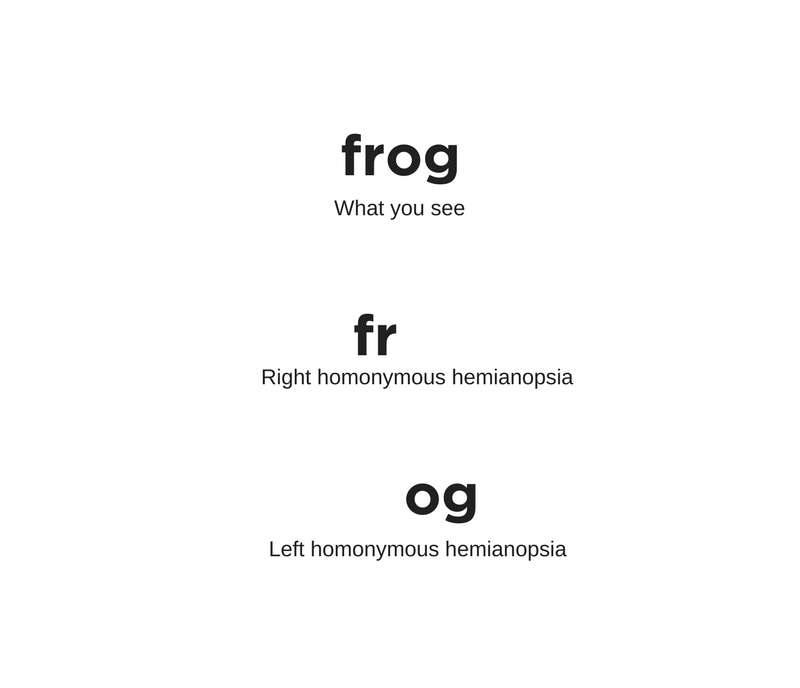
Why Guessing Happens When Reading With Homonymous Hemianopia
Children with vision loss often make guessing errors while reading, not because they’re lazy or not trying, but because they literally can’t see the whole word.
If they can only see part of a word (like the ending), their brain may try to fill in the blank based on what they’ve seen before. For example:
A child with left homonymous hemianopia (caused by surgery on the right side of the brain) may try to read the word peach but only see each. They might guess each or beach based on what makes sense in the sentence.
This kind of guessing is understandable, but it leads to frequent reading mistakes, especially with unfamiliar words.
Why Left-Sided Vision Loss Is Especially Tough for Reading
In left homonymous hemianopia (from right-sided epilepsy surgeries), reading can be particularly challenging. Here’s why:
The child may miss the first part of a word, which often contains the clues to identify it quickly.
They may lose their place on the page, especially when moving from the end of one line to the beginning of the next.
They may skip entire lines without realizing it.
Beginning readers, who are still learning how to decode words, may find this especially frustrating and discouraging.
These challenges can affect a child’s confidence, but with targeted support, they can still become strong, successful readers.
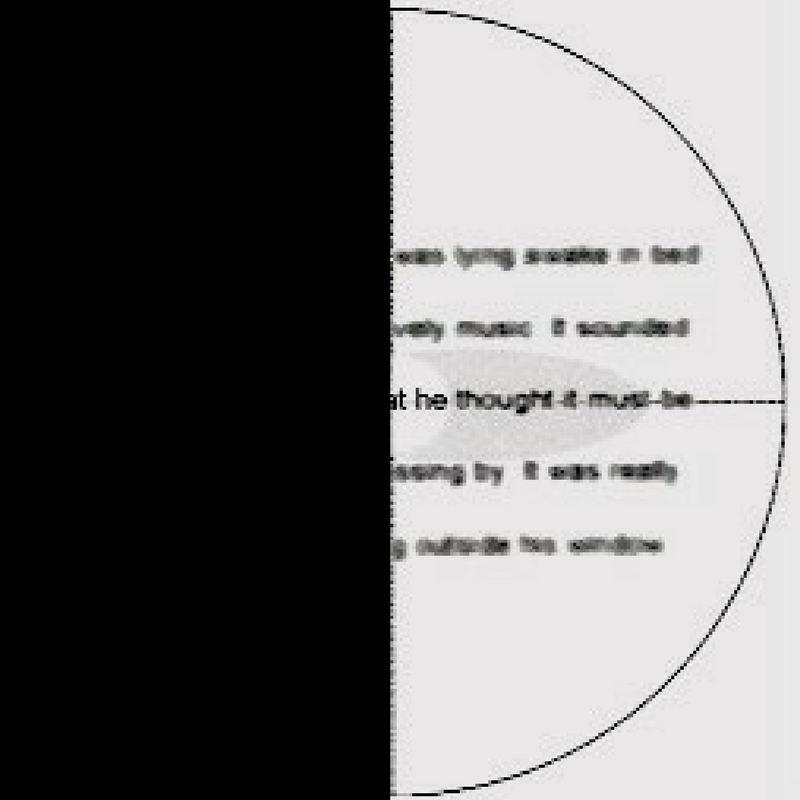
Remember this image? You can see how reading when missing the left side of the page can be challenging.
The greatest challenge – reading with right hemianopia
Right homonymous hemianopia – vision loss on the right side of both eyes – happens after left-sided brain surgeries. This type of vision loss poses the greatest challenge for learning to read in languages like English, Spanish, and French, which are written and read from left to right.
Why? Because your child is now reading into their blind side – the very direction reading flows in.
What Skilled Readers Normally See
In fluent readers, the eyes don’t just see one word at a time. As they focus on a word, they also take in a small area of text around it — called the perceptual span.
-
About 4 letters to the left
-
And about 15 letters to the right
The letters to the right help readers predict which word is coming next, and guide their eye movement so they can read smoothly and quickly. This right-side “preview” is a big part of reading fluency.
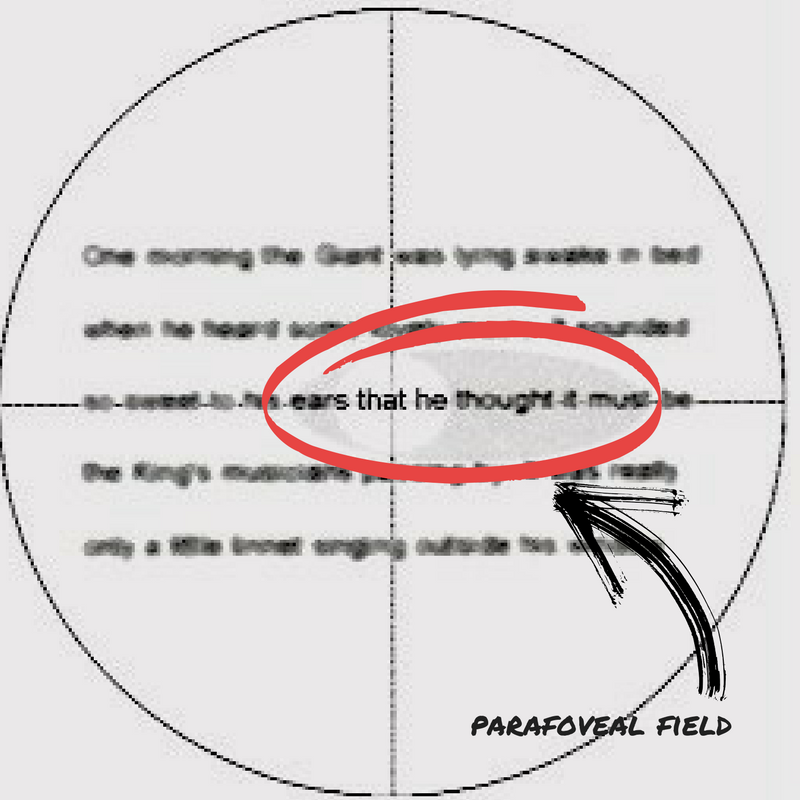
The more letters you can see on the right, the faster your reading speed (known as fluency) because you know which word to focus your eyes on next. Reading after left-sided surgeries is particularly challenging because not only is most of the word missing, but the right parafoveal vision – which includes those 15 letters to right – is gone.
What Happens After Left-Sided Surgeries
After a surgery on the left side of the brain, a child loses their right parafoveal vision — including that important 15-letter preview zone.
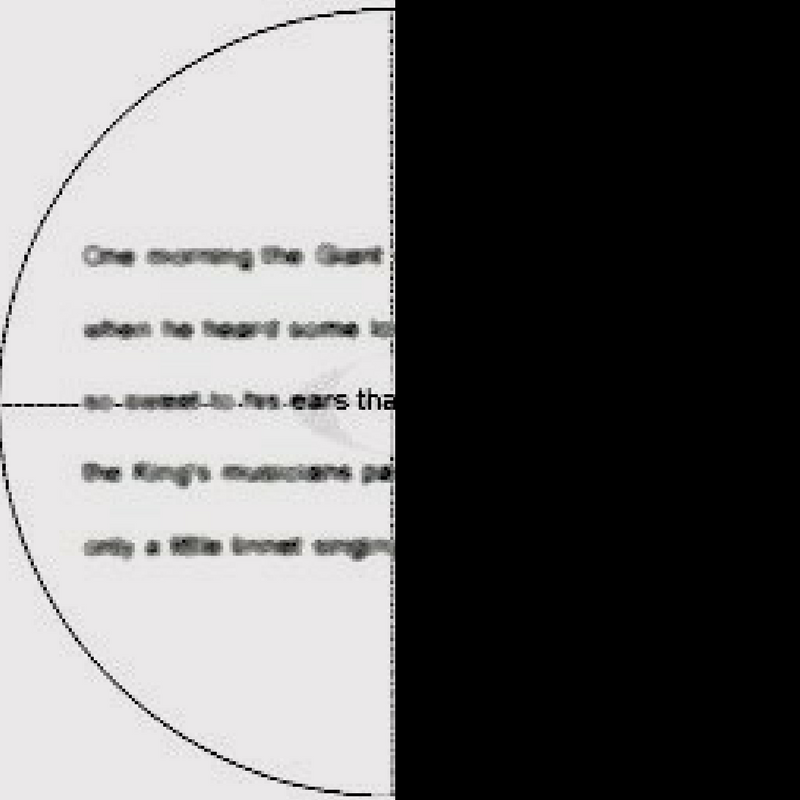
Here’s what that means for reading:
-
Most of the next word is missing
-
The child has to guess or hunt for where to move their eyes next
-
They may need to re-focus or re-read words repeatedly
-
Reading becomes slow, effortful, and can be mentally exhausting
This creates a “bottleneck” effect: it takes much longer for the child to process what they’re seeing, which can make reading aloud (oral fluency) especially difficult.
Emotional Impact
Adults with right homonymous hemianopia often describe the experience as trying to read into nothingness. This can be frustrating, fatiguing, and discouraging.
For a child who’s just learning how to read, this can lead to:
-
Avoidance of reading
-
Low confidence
-
A growing dislike of books and school
But there’s hope: with the right tools and support, many children learn to work around these challenges and develop a love for reading again.