

Why the Words Doctors Use Matter to Families
When my son Bennett was a baby, he kept making strange little jerking movements. Every time I brought it up to his doctor, she brushed off my concerns. “It’s a normal startle reflex,” she said. But on Mother’s Day, at five months old, he cried all day long. I didn’t realize it then, but he wasn’t just upset; he was having seizure after seizure.
A neurologist soon diagnosed him with infantile spasms, a dangerous form of epilepsy, and an MRI showed nearly half his brain was damaged from a stroke before he was born.
Our local doctors refused to discuss treating his seizures with brain surgery, even with extensive stroke damage on one side and medications failing. “We don’t even want to talk about a hemispherectomy,” they told us. “There’s still a lot of good brain left.” Those dismissive words cost us two agonizing years while the spasms continued to damage his brain. Finally, we traveled 2,000 miles to another medical center that would act quickly. That was 20 years ago, and Bennett had his very last seizure the morning of his surgery.
Monika Jones, Executive Director of the Pediatric Epilepsy Surgery Alliance (PESA), went through a similar nightmare. When her son Henry was just four days old, she found the hospital’s neurologist standing over her son’s bassinette at midnight. Instead of spending a few moments with her (a new mother), he said:
“Your son has hemimegalencephaly. He will survive, but he will never be normal.” Then he turned around … and walked away.
Comments like these stick with a parent forever.
That’s why we brought parent stories and trauma-informed strategies directly to child neurologists, brain specialists, social workers, and nurses at the Child Neurology Society Annual Meeting in Montréal last month. We ran a workshop called “Do No Harm: Trauma-Informed Communication in Pediatric Epilepsy” to show clinicians why supporting a parent’s emotional health matters just as much as managing the seizures.
Parents and Medical Experts Working Together
Three leading specialists co-led the workshop alongside our team:
- Dr. Monica Lemmon (Child Neurologist, Duke University) explained how routine clinic appointments can trigger past medical trauma for parents without doctors realizing it.
- Dr. Mary Lou Smith (Senior Neuropsychologist, SickKids Toronto) presented data tracking parent stress, anxiety, and PTSD over time.
- Dr. Lauren Treat (Pediatric Neuropalliative Care Specialist and Child Neurologist, Children’s Hospital Colorado) walked providers through practical ways to talk with families without hiding behind confusing medical terms.
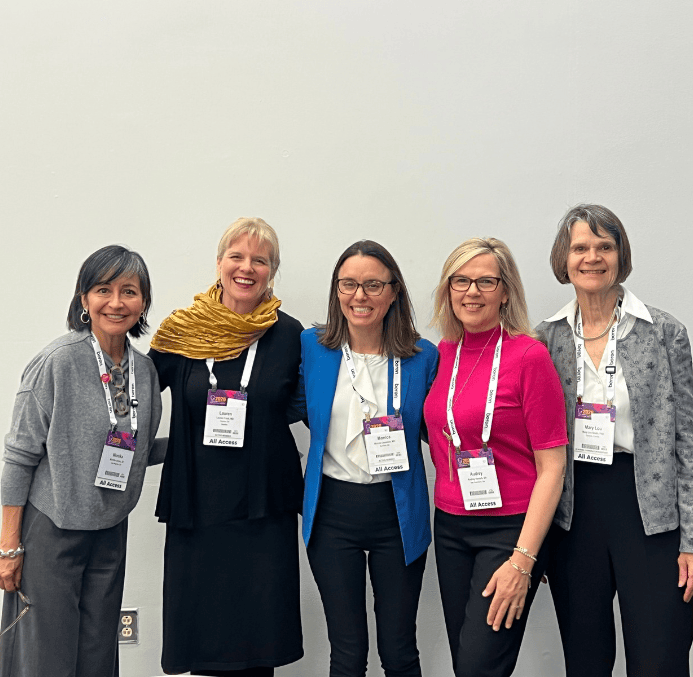
From left to right: Monika Jones, Dr. Lauren Treat, Dr. Monica Lemmon, Audrey Vernick, Dr. Mary Lou Smith
Having these respected experts stand side by side with parent advocates sent a clear message: you can’t treat the child without caring for the whole family.
Face-to-Face Conversations with Doctors
The most meaningful part was the open dialogue. In small breakout groups, we sat face-to-face with chiefs of major pediatric epilepsy programs to discuss the hardest moments in their medical practice.
We talked about what’s really driving a parent’s questions. When someone asks, “Do we really have to add another drug?” or “Why surgery?” they aren’t questioning the medicine. They’re processing their fear and grief. Addressing those feelings first is the only way to build the trust needed to make life-altering choices together.
We also looked at how to curb “information toxicity.” It is overwhelming when doctors throw complicated words at parents who are still in shock. Doctors reflected on simple shifts they can make, like pausing to check if a parent is emotionally ready before delivering heavy news and selecting their words more carefully.
Watching those specialists open up, listen to parents’ experiences, and walk away with simple strategies they could use in clinic right away was unforgettable.
This Matters Because Medical Trauma Is Real
At PESA, we’ve always known that raising a child with severe epilepsy causes real trauma. Trauma-informed care shifts the perspective. Instead of asking “What’s wrong with your child?” it asks “What has your family lived through?“
A severe epilepsy diagnosis turns your life upside down overnight. Watching your child have constant seizures and facing terrifying decisions about brain surgery take a massive toll. Research shared by Dr. Mary Lou Smith backed this up:
- Up to 30% of parents of kids with epilepsy experience PTSD, and another 40% deal with severe trauma symptoms.
- Successful surgery doesn’t erase past trauma, as high stress levels can linger for years, even when seizures stop.
- Mothers carry an immense load, reporting depression and anxiety rates 11 times higher than fathers due to daily caregiving demands.
Having solid data back up what we’ve lived through brings a huge sense of relief. It proves that we aren’t imagining this, and we aren’t alone in our struggles.
A Special Moment: Dr. Danielle Barber’s Speech
Dr. Danielle Guez Barber later highlighted the impact of our Parent Support Navigator Program when she received the prestigious Philip Dodge Young Investigator Award.
Dr. Barber is a scientist, a newborn brain specialist, and a mother. Her daughter, Noa, was born with a brain injury and had successful epilepsy surgery this past summer. Before the operation, Dr. Barber received one-on-one peer support from PESA’s Parent Support Navigator, Melinda Hughie Blalock.
Accepting her award, Dr. Barber echoed our belief that “Epilepsy surgery saves lives,” telling the room full of child neurologists:
“The Pediatric Epilepsy Surgery Alliance is so helpful. Our parent supporter, Melinda, pictured there with Noa, helped us see it from a parent’s perspective. When you hear another parent say, ‘I wish we did it sooner,’ that changes a lot. 100% of the epileptologists in this room should be talking to your patients about the Pediatric Epilepsy Surgery Alliance because you don’t have the time to do all the counseling, and there’s information your parents need. Your patients need to hear from this organization.”
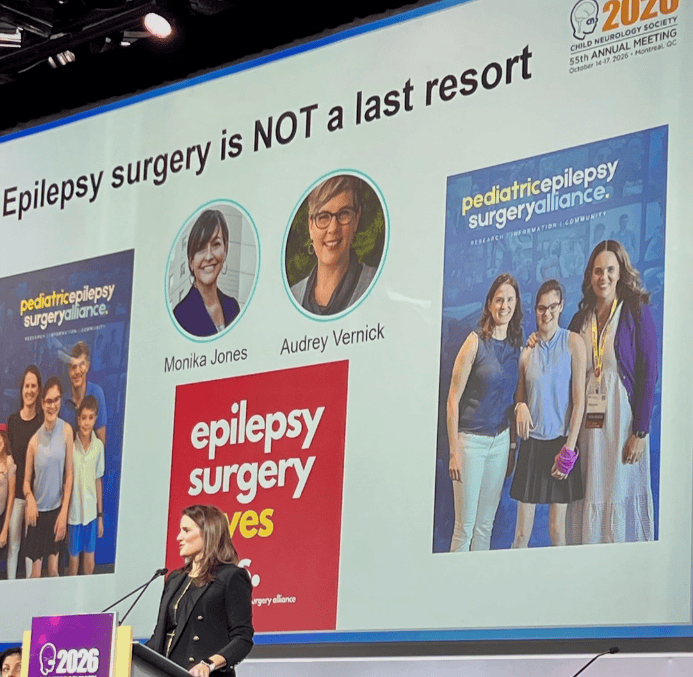
Hearing a doctor advocate for peer support like that shows why this work matters. When you talk to another parent who has actually walked this road, you get real hope and clarity on what questions to ask. Most importantly, you learn you aren’t doing this alone.
Shifting Research Toward Family Health
PESA’s influence is reaching medical journals, too. PESA Director Monika Jones and I co-authored a new paper led by Dr. Elaine Kiriakopoulos in Epilepsy & Behavior titled “Whole Person Health in Epilepsy: Prioritizing Care-Partner Wellbeing.”
Our message to clinicians is simple: parent stress directly affects medical decision-making and a child’s recovery. Caring for a parent’s mental health is essential to effective pediatric care.
You Do Not Have to Do This Alone
If you’re weighing surgery options or feeling burned out by years of medical stress, PESA is here to help:
- Parent Support Navigator Program: Connect one-on-one with parents who have been through pediatric epilepsy surgery themselves.
- Family Mental Health Hub: Free, practical coping strategies and guides designed specifically for epilepsy families.
- Sibling Support Hub: Dedicated tools and stories to help brothers and sisters navigate the experience, too.
How to Take the Next Step
- Talk to Your Care Team: Ask your doctors about mental health resources for your family, or ask if they practice trauma-informed care in clinic.
- Pass It Along: Share this article with a doctor, nurse, or another parent who needs to know they aren’t alone.
References & Sources
Callander, R. (2020). Effective Communication in Healthcare: Disability / The Health Language Matrix.
Carmassi, C., et al. (2017/2018). DSM-5 criteria for PTSD and post-traumatic stress symptoms in parents of pediatric patients with epilepsy. Epilepsy & Behavior, 70, 97–103.
Kiriakopoulos, E. T., Wagner, J. L., Jones, M., Vernick, A., Kukla, A., Reilly, P., Prieto, S., Kaden, W. M., & Chu, F. (2026/2027). Whole person health in epilepsy: Prioritizing care-partner wellbeing. Epilepsy & Behavior, 186, 111335.
Joshi, Charuta. (2026). Closing the GAP in IGAP priorities: Attention to Parental Stress in Pediatric Epilepsy. Epilepsy Currents. 26. 388-390. 10.1177/15357597261439484.
Lemmon, M. E., et al. (2021/2023). Family-Centered Care and the ALIGN Framework for Pediatric Neurologic Conditions. Pediatric Neurology, 124.
Smith, M. L., Puka, K., et al. (2023). Trajectories of parent well-being in children with drug-resistant epilepsy. Epilepsia, 64(8), 2162–2171.
Treat, L., & Dingman, A. (2023/2025). What Do Parents of Seriously Ill Infants With Neurologic Conditions Want From Their Medical Team? Neurology, 100(8).
Trowbridge, A., Moore, A., & Hurd, C. (2026). The hidden harm of information toxicity: Rethinking how we share medical information. Acta Paediatrica, 115, 1620–1624.
about the author
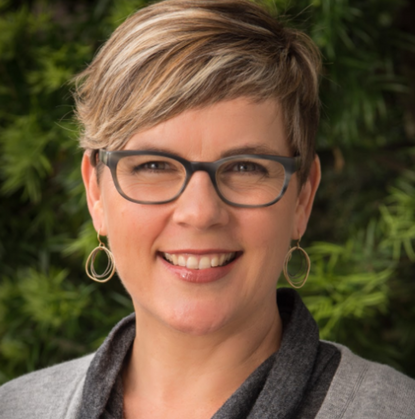
Audrey Vernick is our Director of Patient and Family Advocacy. She is the parent of a child who had hemispherectomy for seizures caused by stroke. She holds a level 2 certification in Special Education Advocacy Training from the Council of Parent Attorneys and Advocates and is certified by The ARC in future planning. She also serves on the International League Against Epilepsy’s Social Work and Social Services Section.